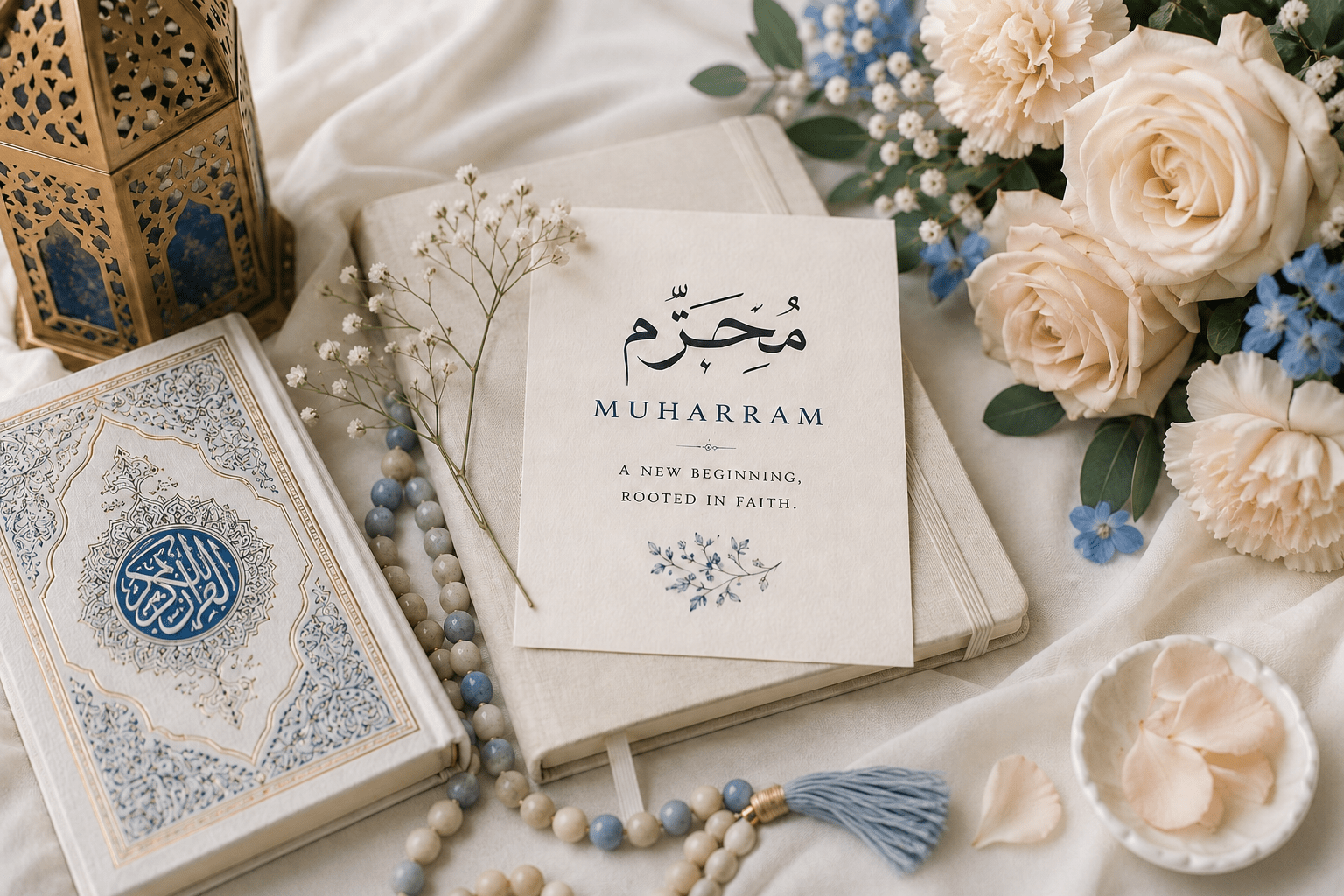
The Sacred Calendar : Al-Ashhur Al- Hurum
ZAHRASBEST ROOTED IN FAITH. BLOOMING WITH BARAKAH.
THE SACRED CALENDAR · AL-ASHHUR AL-HURUM
We Are Inside the Sacred Months
Dhul Qa'dah · Dhul Hijjah · Muharram · and Rajab
"Indeed, the number of months with Allah is twelve lunar months in the register of Allah from the day He created the heavens and the earth — of these, four are sacred."
SURAH AT-TAWBAH, 9:36
The Ashhur Al-Hurum — the Sacred Months — are four months that Allah جل جلاله Himself set apart from the very creation of the heavens and the earth. In these months, the weight of good deeds is amplified, and the gravity of wrongdoing is heavier. They are months of elevation, of restraint, of intentional nearness to Allah.
Three of the four come consecutively — one flowing into the next like a river of mercy: Dhul Qa'dah, Dhul Hijjah, and Muharram. The fourth, Rajab, stands alone in the middle of the year — a solitary gift placed between the ordinary months.
Four Sacred Months — An Overview
WHERE WE ARE NOW · 11TH MONTH
Dhul Qa'dah — القعدة ذو
The month of "sitting" — historically, a month of rest from travel and conflict, designated sacred so that pilgrims could travel safely to Makkah. It opens the sacred trilogy and marks the beginning of the Hajj preparation season. Even in its quieter nature, it carries the weight of Al-Ashhur Al-Hurum. Use this time to prepare your heart, your intention, and your ibadah for what is coming.
COMING NEXT · 12TH MONTH
ذو الحجة — Dhul Hijjah
The month of Hajj — home to the ten most blessed days of the entire year, Yawm Al-Arafah, and Eid Al Adha. The pillar of Islam is fulfilled here.
THE NEW YEAR · 1ST MONTH
محرم — Muharram
The first month of the Islamic year and one of the most sacred. Home to Yawm Ashura — a day of immense historical significance and fasting.
STANDALONE SACRED MONTH · 7TH MONTH رجب — Rajab
The solitary sacred month — set apart in the middle of the calendar year. Rajab is the precursor to Sha'ban and Ramadan, and was historically revered as a month of worship and abstaining from fighting. It is sometimes called Rajab Al-Fard (the Solitary Rajab). The Isra wal Mi'raj — the Night Journey of the Prophet صلى الله عليه وسلم — is observed during this month.
Dhul Hijjah — Crown of the Year
Of the four sacred months, Dhul Hijjah holds a place unlike any other. The Prophet صلى الله عليه وسلم said: "There are no days on which righteous deeds are more beloved to Allah than these ten days." The companions asked: not even jihad in the way of Allah? He replied: "Not even jihad — except for a man who goes out with his life and wealth and comes back with nothing." (Bukhari)
Allah جل جلاله swore by these days in Surah Al-Fajr: "By the dawn, and by the ten nights." When Allah swears by something, it is because of its immense significance to Him. These days are not to be spent ordinarily.
1–8 Days of Dhikr, Fasting & Good Deeds
Fill these days with tahlil (La Ilaha illAllah), takbir, (Allahu Akbar), tahmid, AlHamdulillah الحمد, and tasbih سبحان(. Fast any or all of these days. Give sadaqah. Read Quran. Repair relationships. Every good deed in these days carries extraordinary weight.
Day 8 -Yawm Al-Tarwiyah — Day of Preparation
The day pilgrims set out toward Mina. For those at home: a day to fast, to make du'a, and to consciously prepare the heart for the greatest day that follows.
Day 9 Yawm Al-Arafah — Greatest Day
The pinnacle of the year. For pilgrims, standing on Arafah is the very heart of Hajj. For those at home: fasting this single day expiates the minor sins of the previous year AND the coming year — two full years of minor sins, for one day of fasting. (Muslim) Allah descends to the nearest heaven and boasts of His servants to the angels. Make du'a. Weep. Ask for everything.
Day 10 Yawm Al-Nahr — Eid Al-Adha
The day of sacrifice. The celebration of Ibrahim صلى الله عليه وسلم's ultimate submission. The greatest day of the year. We mark it with Eid prayer, udhiyah (qurbani), family, and shukr. It is followed by the three Days of Tashriq (11th, 12th, 13th) — also days of eating, dhikr, and celebration.
Hajj — الحج Fith Pillar
Hajj is the sacred pilgrimage to Makkah Al-Mukarramah — obligatory once in a lifetime for every Muslim who is physically and financially able. It is the most complete act of worship in Islam, combining the body, wealth, heart, and the entire Ummah into one.
The rites of Hajj trace the footsteps of Ibrahim صلى الله عليه وسلم, Hajar صلى الله عليه وسلم, and Ismail صلى الله عليه وسلم. The tawaf around the Ka'bah. The sa'y between Safa and Marwah — running where Hajar ran, a woman whose tawakkul split the earth open with Zamzam. The standing at Arafah. Each act is a living testimony: we surrender, and in surrendering, we are free.
For those who cannot make Hajj this year — do not grieve. The Prophet صلى الله عليه وسلم told us that the one who prays Fajr in congregation, then sits in dhikr until sunrise, then prays two rak'ah — has the reward of a complete Hajj and Umrah. (Tirmidhi) Allah's generosity has no ceiling and no conditions except sincerity.
Muharram — Sacred New Year
After the celebration of Eid Al-Adha, the Islamic year closes and opens again with Muharram — and Allah's generosity simply continues. The Prophet صلى الله عليه وسلم called it "the month of Allah" — an honor given to no other month by name. Fasting in Muharram is the most virtuous voluntary fast after Ramadan.
Yawm Ashura — the 10th of Muharram — is a day laden with history:
This is the day Allah saved Musa صلى الله عليه وسلم and the Children of Israel from Pharaoh — parting the Red Sea and drowning the oppressor. Musa صلى الله عليه وسلم fasted this day in gratitude, and when the Prophet صلى الله عليه وسلم learned this upon arriving in Madinah, he said: "We have more right to Musa than you." And he fasted — and instructed the Muslims to fast. (Bukhari & Muslim)
Scholars also note this as a significant day in the history of Nuh صلى الله عليه وسلم (when the ark came to rest), and many other prophetic events.
The Prophet صلى الله عليه وسلم intended to fast the 9th alongside the 10th to
distinguish from the Jews — making it a sunnah to fast the 9th and 10th of Muharram together.
And the reward? Fasting Ashura expiates the minor sins of the previous year. (Muslim) — A full year of minor sins, lifted by two days of fasting. Allahu Akbar.
What You Can Do — An Amal Guide
Across all of Al-Ashhur Al-Hurum, and especially in the first ten days of Dhul Hijjah: Fast the first nine days of Dhul Hijjah, or as many as you are able. Guard Yawm Al-Arafah above all — it is unlike any other day of fasting in what it carries.
Revive the takbir aloud — Allahu Akbar, Allahu Akbar, La Ilaha illAllah, Allahu Akbar, Allahu Akbar wa lillahil hamd. Say it in your home, in the car, walking down the street. This sunnah has been largely abandoned; let us bring it back.
Give sadaqah generously. Even a small, consistent amount carries the weight of these days. Consider donating qurbani on behalf of those who cannot.
Plan your udhiyah (qurbani). The sacrifice of an animal on Eid Al-Adha or the days of tashriq is a sunnah mu'akkadah — a strongly emphasized sunnah. Many organizations allow you to give qurbani globally on your behalf.
Read Surah Al-Kahf on Fridays especially throughout the sacred months. Read Surah Al-Hajj to connect with the rites being performed in Makkah.
Plan to fast the 9th and 10th of Muharram — mark your calendar now. Two days of fasting that close a full year of minor sins, bi idhnillah.
Make du'a with a written list on Arafah Day. Be specific. Be vulnerable. Name what you want, name who you are making du'a for. These are the moments our faith is built on.
Dressing with Intention — Modesty as Ibadah
There is something profound about clothing in worship. The pilgrim enters ihram — two simple, unstitched white cloths — a radical equalizer. All markers of wealth and status dissolve. What remains is the servant and her Lord.
For those of us at home, our modest dress carries its own testimony in these days. When we step outside in our abayas and hijabs during the takbir days of Eid, we are a visible statement of belonging — to something greater than this dunya.
As you prepare for Eid Al-Adha — for the Eid prayer, for family, for celebrating as the ummah around the world celebrates together — we at ZahrasBest pray that every piece you wear feels like an extension of your niyyah. That the act of dressing that morning is an act of gratitude. That you feel beautiful, dignified, and deeply rooted.
Our Garden Collection, arriving for this Eid season, was born from a love of beauty and a conviction that Muslim women deserve clothing worthy of their occasions and their faith. Each piece was chosen with you in mind — for mornings that begin with takbir and evenings that end in shukr.
Taqabbal Allahu minna wa minkum. May Allah accept from us and from you.
O ALLAH, BLESS US IN DHUL QA'DAH, AND ALLOW US TO REACH DHUL HIJJAH AND MUHARRAM
© 2026 ZAHRASBEST · ZAHRASBEST.COM · ROOTED IN FAITH. BLOOMING WITH BARAKAH.